





We know that dry or frizzy hair can be frustrating, unpredictable, and difficult to manage. One day, it can feel soft and healthy; the next, it’s dull, rough, or showing all of your flyaways in the wind.
But your hair doesn’t always need to feel dry and unmanageable. Take note if your locks feel dry – it’s a sign that they would benefit from some extra love, nourishment, and protection.
Understanding why dryness and frizz happen is essential if you want happier, healthier hair. It only takes a few minor changes to your routine to improve manageability, restore softness, and prevent frizz over time.
Dry hair vs frizzy hair: what’s the difference?
Frizzy hair and dry hair are often experienced together, but that doesn’t mean that they are, or are caused by, the same thing.
Dry hair lacks moisture and natural oils that have often been stripped away with harsh products. This can leave your strands feeling brittle, rough, or prone to breakage.
On the other hand, frizzy hair occurs when the outer layer of the hair (the cuticle) is raised, allowing moisture from your environment to move in and out of the strand too easily. This often leaves some strands with a mind of their own, not lying flat and instead sticking out or up slightly.
If your hair is dry, then your cuticles will struggle to lie flat, making frizz more likely.
Why does this happen?
Causes of dry hair
- Loss of natural oils– When your strands don’t retain enough moisture or their natural oils, your hair can struggle to stay soft and flexible. It can happen gradually, going unnoticed until you can actually feel the changes in your hair texture and manageability.
- Washing your locks too frequently– Natural oils produced by the scalp help protect your hair and keep it supple. These oils can be stripped away by washing hair too often or using overly harsh products.
- Heat and styling– Using heat tools and chemical treatments can weaken your hair’s protective barrier, allowing moisture to escape more easily.
- Environment and ageing– Sun exposure, cold weather, wind, pollution, and seasonal changes can all draw moisture out of the hair fibre. Additionally, ageing can reduce the amount of natural oils your scalp produces, leading to drier hair over time.
Causes of frizzy hair
- Raised hair cuticle – If the outer layer of your hair cuticle is raised or uneven – for example, with dry hair – it allows moisture to move in and out of the strand too easily.
- Humidity and air moisture– When it’s humid, your hair strands can become porous or damaged, leaving them rough.
- Towel drying and over-brushing– Using an abrasive towel to dry your hair can strip your hair of those essential natural oils. Over-brushing your hair can lead to breakage, leaving split ends that are more frizz-prone.
- Heat damage– While heat can temporarily smooth your hair, repeated use weakens the cuticle structure – especially without heat protection!
How to fix dry hair and prevent frizzy hair
1. Start with a healthy scalp
We’ve said it before, and we’ll say it again: healthy hair starts at your scalp. If your scalp is congested with product buildup or excess oil, then moisture can struggle to reach your hair fibre. Gently massaging your scalp while double-shampooing can help remove buildup before it becomes an issue.
A dry scalp can not only be uncomfortable for you to deal with, but it can also cause itchiness, sensitivity, and dry flakes. A dry scalp is often confused with dandruff, when in fact, dandruff is caused by excess oils on the scalp rather than a lack of moisture.
To nourish your scalp, opt for hydrating products including nourishing shampoos, conditioners and serums
2. Cleanse less frequently
Frequently washing your hair with strong shampoos can disrupt your hair’s natural moisture balance. If your hair feels dry or frizzy, it may be a sign that it’s being over-cleansed.
UpCircle Tip: Cleanse less frequently, but double shampoo when you do.
Double shampooing involves washing your hair and scalp twice in one sitting to remove any stubborn impurities and buildup.
- The first cleanse of your scalp and hair works to break down any dirt, buildup and excess oils.
- The second cleanse targets stubborn oil and product buildup (did anyone say dry shampoo?) to leave cleansed – not stripped hair.
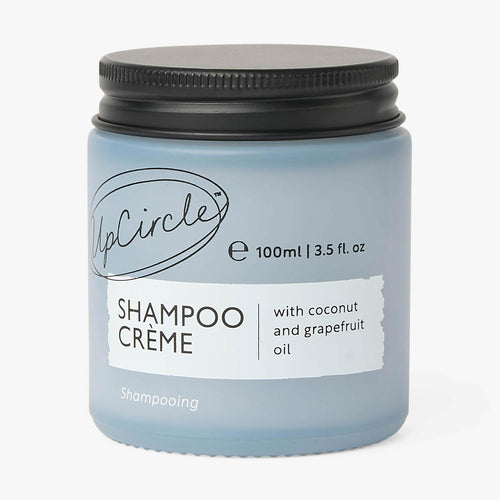
Product Spotlight: Our Shampoo Crème is clinically proven to relieve scalp irritation.
Choose gentle, sulphate-free formulas that cleanse effectively without stripping your hair of the oils it needs to stay soft and smooth. Reducing your hair washing frequency, even slightly, can make a noticeable difference to how your hair feels.
3. Don’t skip conditioning
Conditioner is essential for dry or frizzy hair, helping to replenish moisture, smooth the cuticle, and improve manageability. Apply conditioner mainly to the mid-lengths and ends, where your hair is oldest and driest, and allow it time to work before rinsing.
Product Spotlight: Our Conditioner Crème is formulated with hair-loving ingredients like coconut oil, bamboo extract and upcycled orange peel wax. These ingredients work to nourish, protect, and seal essential hydration.
4. Treat your hair weekly
Conditioning alone might not be enough to manage very dry or frizz-prone hair. Using a hair oil before washing your hair can help restore moisture and strengthen the hair fibre.
How to Use:
- Apply a generous amount of the Scalp + Hair Oil directly onto hair, focusing on the scalp, roots and ends.
- Gently massage with your fingertips for two to five minutes to stimulate microcirculation and nourish the scalp.
- Leave the oil on for a minimum of 20 to 30 minutes, or overnight for an intensive treatment. Wash and style as usual.
- For an extra boost, lightly mist your hair with water before applying the oil. This helps the oil form a protective barrier around each hair strand, locking in moisture and supporting elasticity. This ensures hair stays nourished, resilient, and beautifully soft.
Product Spotlight: Once or twice per week, use our Scalp + Hair Oil to help repair damage and strengthen locks.
5. Lock moisture in after washing
Frizz often appears after washing, when hair dries and loses moisture too quickly. Sealing hydration into your damp hair helps smooth your cuticle and improve softness.
Apply a Hair Serum to freshly washed, towel-dried hair, focusing on the ends. This is especially helpful if you’re trying to prevent frizzy hair without relying on heat or heavy styling.
Product Spotlight: Our Hair Serum has serious anti-breakage power and protects from humidity and frizz. See our Lab Trial Results.
6. Rethink your routine
Other factors, such as heat and the weather, can impact your hair. If you’re struggling with frizz, it might be time to lower your heat setting on your tools and let your hair air dry where possible. Heat styling lifts the hair cuticle, allowing moisture to escape and increasing the risk of dryness and frizz over time.
Much like your skin’s needs change through the seasons, what your hair needs also changes as the weather turns. Cold weather can increase dryness, while humidity can exaggerate frizz. You don’t need to overhaul your entire routine, but focus on different parts of it more depending on the season. See our full guide to Seasonal Haircare.
By choosing gentle, nourishing products and building a routine that supports both your hair and the planet, you can combat dry locks and frizz.
See our full collection of natural haircare products.