





If your skin often feels tight or uncomfortable and looks dull, no matter how much moisturiser you apply, the ingredients in your products may not be working for you. Dryness and dehydration are two of the most common skin concerns – and while they’re often used interchangeably, they need slightly different approaches to manage them.
But by using ingredients that work well for dry or dehydrated skin, you can support your skin barrier, improve moisture retention, and help your complexion feel comfortable and balanced. Discover why these ingredients work, and how they can work to give you healthy skin.
Dry skin vs dehydrated skin: what’s the difference?
Understanding whether your skin is dry, dehydrated, or a combination of both makes it much easier to choose ingredients that genuinely help.
Dry skin is a skin type in the same way as ‘oily’ and ‘combination’. It lacks oil, which means your skin barrier struggles to hold onto moisture and sebum. Dry skin often feels rough or flaky and may appear dull or tight, particularly after cleansing. You may also have patches of redness and irritation.
Alternatively, dehydrated skin is a condition where your skin lacks water rather than oil. It can impact any skin type, even oily or blemish-prone skin. As your skin doesn’t have enough water to undertake its self-healing processes, dehydrated skin often feels tight, looks less plump, and may show fine lines more easily.
Some people experience both dry and dehydrated skin at the same time. That’s why the most effective skincare routines combine both hydrating ingredients that attract water and nourishing ingredients that help seal it in.
Want to find out more? We’ve dedicated a full blog to the differences between and signs of dry skin and dehydrated skin.
The best hydrating ingredients for dehydrated skin
When your skin is dehydrated, it needs ingredients that draw water into the skin and help maintain healthy moisture levels.
Hyaluronic acid
Hyaluronic acid is one of the most effective hydrating ingredients for dry skin that’s also dehydrated. It works by attracting and holding water within the skin, helping to improve softness, elasticity, and comfort without leaving it feeling heavy or greasy.
For best results, hyaluronic acid should be applied to slightly damp skin and followed with a moisturiser to help lock in hydration.
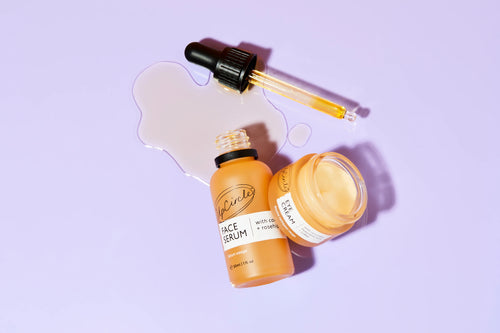
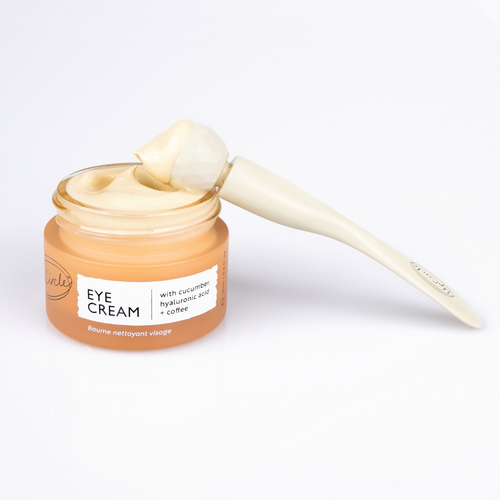
Product Pick: Eye Cream with Hyaluronic Acid + Coffee
Working to brighten tired undereyes, our Eye Cream is formulated with coffee oil extracted from repurposed grounds and hyaluronic acid to boost hydration.
Glycerin
A naturally occurring humectant that helps retain water in skin and hair, glycerin helps draw moisture into the upper layers of the skin.
It supports long-term hydration rather than providing a short-lived plumping effect. It’s also well tolerated by sensitive skin, making it one of the best ingredients for dehydrated skin.
Product Pick: Face Toner with Hyaluronic Acid
A hydrating toner enriched with hyaluronic acid to plump the skin, glycerin to moisturise, and chamomile to soothe. It clears pores and helps to keep blackheads at bay.
Aloe vera
Aloe vera offers hydration alongside soothing benefits, making it ideal for uncomfortable, dehydrated skin. It helps ease any tightness while supporting your skin’s natural moisture balance.
Product Pick: Cleansing Face Milk with Oat Powder + Aloe Vera
Our Cleansing Face Milk has a milky, creamy formula that hydrates and nourishes the skin, with oat powder to restore your skin’s natural moisture barrier.
The best ingredients for dry skin
If you have dry skin, you will likely benefit most from ingredients that replenish lipids and strengthen the skin barrier, helping to reduce ongoing transepidermal moisture loss (TEWL).
Ceramides
Ceramides are naturally present in the skin barrier and play a key role in keeping moisture locked in. When ceramide levels become low, your skin can feel rough, tight, and more reactive.
Including ceramides in your routine helps restore the function of your skin barrier and improve comfort, making them one of the most effective active ingredients for dry skin.
Find out more about ceramides in our previous blog post.
Plant oils
Oils such as jojoba, sunflower, and rosehip help soften dry skin by mimicking the skin’s natural lipids. These oils work to reduce moisture loss via TEWL and improve smoothness over time, and are particularly useful for dry skin that feels rough or lacks flexibility.
For example, rosehip oil naturally contains linolenic and linoleic acids, which are essential fatty acids. These help your skin cells to retain water to keep it hydrated. Sunflower seed oil is a great source of natural ceramides due to the linoleic acid and oleic acid it contains, and jojoba oil strengthens your skin’s moisture barrier.
Product Pick: Organic Face Oil with Coffee Extract
Containing all three mentioned plant oils and a multitude of others, our Organic Face Oil is 100% natural and suitable for all skin types.
Shea butter
Rich in fatty acids, shea butter is especially beneficial for very dry skin. It helps protect the skin barrier and seal in hydration without disrupting the skin’s natural balance.
As shea butter has emollient properties, the rich oils produced by the kernels will soak into dry skin, leaving your complexion looking smoother, plumper and feeling softer.
Product Pick: Lip Balm with Hemp Seed Oil + Shea Butter
Formulated with hemp seed oil and shea butter, this lip balm softens and nourishes dry lips.
Approach with care
Experiencing dry or dehydrated skin can be frustrating, but it’s often a sign that your skin needs more support, not more steps. Any dryness or dehydration in your skin can be exacerbated by using products containing certain ingredients. Using high-strength exfoliating acids (like AHAs and BHAs), frequent over-cleansing, or alcohol-heavy formulas can all contribute to disrupting your skin barrier.
This doesn’t mean you need to avoid active ingredients altogether, but they should be used thoughtfully, alongside nourishing and hydrating products that support your skin’s health. Using products that work with your skin barrier doesn’t just benefit your complexion, but it also encourages a more sustainable, less wasteful approach to skincare.
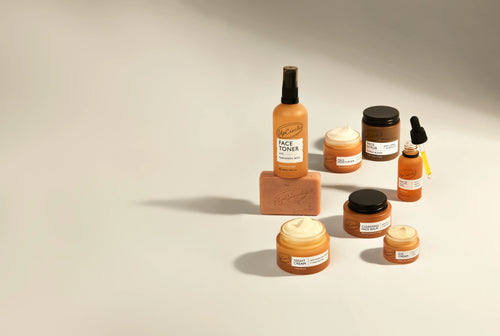
Discover our full collection of natural, vegan skincare.